
A family story becomes useful evidence when the records join up.
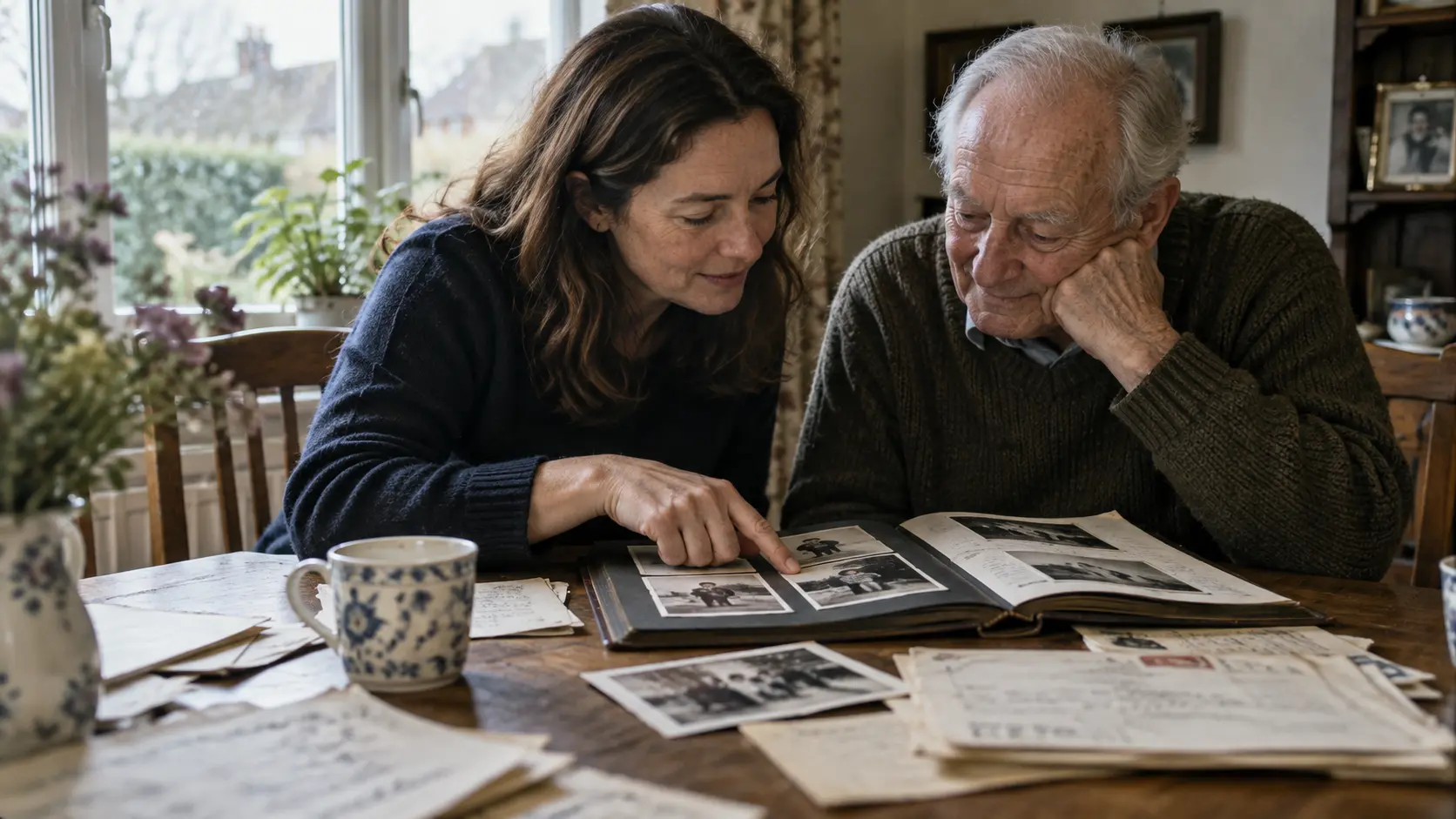
Claire’s next decision
Claire has the grandparent's certificate but notices that later records use different surnames. Family members understand why; a reader of the documents may not. She draws a simple parent-child chain and lists the record that supports each link, including any relevant name-change evidence.
That turns a vague concern into specific documents to locate. She also keeps her own route requirements on a separate list so the family history does not dominate the entire application. Her next enquiry asks whether the evidence connects the relevant people clearly and whether any missing or disputed record needs more specialist attention.
An illustrative scenario, not a client story or an example of a successful application.
Identify the relevant ancestor
Start with the precise qualifying relationship and official records that show the connection. An informal family tree is not a substitute for the required evidence.
Check the applicant’s route conditions
Nationality, age, the purpose of coming to the UK and other current eligibility rules must be considered together; ancestry alone is insufficient.
Plan document collection
Birth, marriage or other records may be held across countries. Check names and dates carefully and do not assume missing certificates can be ignored.
Screen complications
Disputed records, changing family names that cannot be reconciled or adverse immigration history may require higher-level advice rather than routine Level 1 preparation.
Key takeaways: what to do next
- Start here. Map each generation and name change to supporting records, while separately checking your own route conditions.
- If the facts are clear, compare them with the current official guidance below and list the evidence still needed. Keep the purpose of each document clear.
- If a fact is uncertain or disputed, flag it before submitting or paying for application work. Ask whether the issue needs an adviser with different authorisation or experience.
An enquiry does not extend a deadline or confirm that we have accepted instructions. For an urgent matter, seek appropriately authorised help promptly.
Frequently asked questions
How should I identify the relevant ancestor?
Start with the precise qualifying relationship and official records that show the connection. An informal family tree is not a substitute for the required evidence.
Is ancestry evidence the whole UK Ancestry visa application?
Nationality, age, the purpose of coming to the UK and other current eligibility rules must be considered together; ancestry alone is insufficient.
How should I organise family certificates and name changes?
Birth, marriage or other records may be held across countries. Check names and dates carefully and do not assume missing certificates can be ignored.
When do ancestry evidence problems need referral?
Disputed records, changing family names that cannot be reconciled or adverse immigration history may require higher-level advice rather than routine Level 1 preparation.
What is the practical lesson from Claire’s example?
Map each generation and name change to supporting records, while separately checking your own route conditions. The example is fictional and does not establish eligibility or predict a decision in another case.
Next steps and official guidance
Check the current official GOV.UK route guidance ↗ and our Level 1 scope and referral policy. For suitable straightforward help, send UK VISA TAX a brief enquiry. Our professional fees are listed separately from government charges on our fee-scale page.
← All immigration guides · Related services
Where is the missing link in your family document trail?
The form prepares an email for you to review and send in your own email app. It does not submit online, arrange a booking or establish an engagement. Please do not include sensitive documents.